The Best Recovery Methods After a Day of Skiing in Utah
The best post-skiing recovery combines cold therapy (cryotherapy or cold plunge) to reduce inflammation, heat therapy (infrared sauna) to relax muscles, IV hydration to replenish fluids lost at altitude, and compression therapy to flush metabolic waste. Deliberate Wellness Studio in Vineyard, UT — 35 minutes from Park City and Sundance — offers all of these under one roof. The optimal protocol: cryotherapy first, then contrast therapy (sauna + cold plunge), followed by compression boots.
Why Skiing Demands Serious Recovery
A full day of skiing is one of the most physically demanding activities you can do. Here's what your body goes through:
Eccentric muscle loading: Skiing primarily uses eccentric contractions (muscles lengthening under load) in your quads, glutes, and core. This type of contraction causes more muscle fiber damage than concentric movements, leading to more intense delayed-onset muscle soreness (DOMS) 24-48 hours later.
Altitude dehydration: Utah's resorts sit at 6,000-11,000 feet elevation. At altitude, you lose moisture faster through respiration and sweat evaporation. Most skiers are significantly dehydrated by end of day without realizing it — the cold masks thirst signals.
Cold exposure fatigue: Hours of cold exposure depletes your body's energy reserves as it works to maintain core temperature. This compounds the muscular fatigue.
Impact and vibration: Moguls, variable snow conditions, and high-speed turns create repetitive impact through your joints. Knees, hips, and lower back absorb tremendous force throughout the day.
The result? Without proper recovery, you wake up the next morning barely able to walk down stairs — and day two on the mountain becomes miserable. Here's how to prevent that.
The Optimal Post-Ski Recovery Protocol
Based on sports science and what our members who ski regularly report works best, here's the ideal recovery sequence after a day on the slopes:
Step 1: Whole-Body Cryotherapy (3 minutes) Within 2-4 hours of finishing skiing, a cryotherapy session may help reduce inflammation throughout your body. The extreme cold (-130°F to -160°F wind chill) triggers a massive norepinephrine release that numbs pain, reduces swelling, and provides an immediate energy boost that counteracts the post-ski crash.
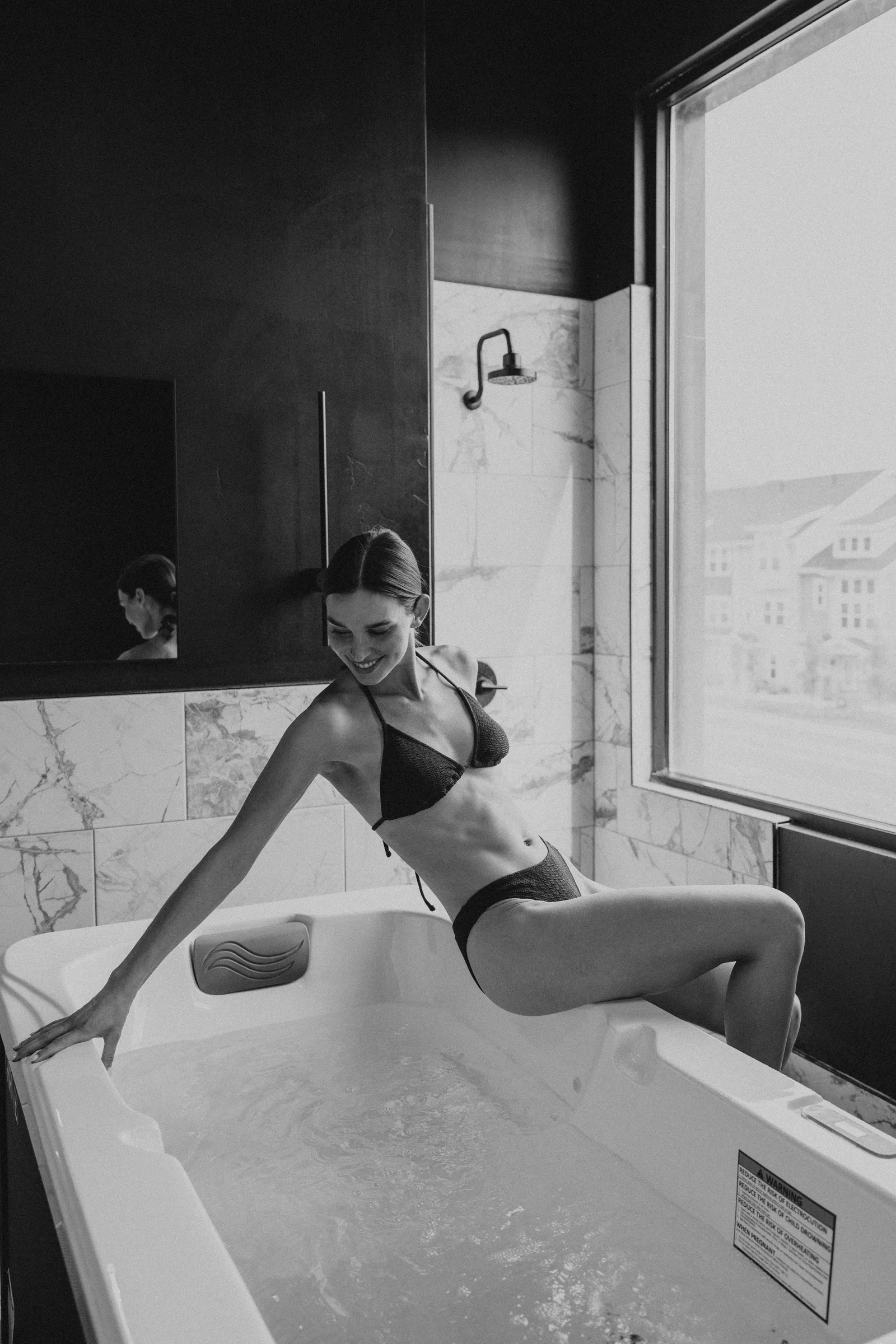
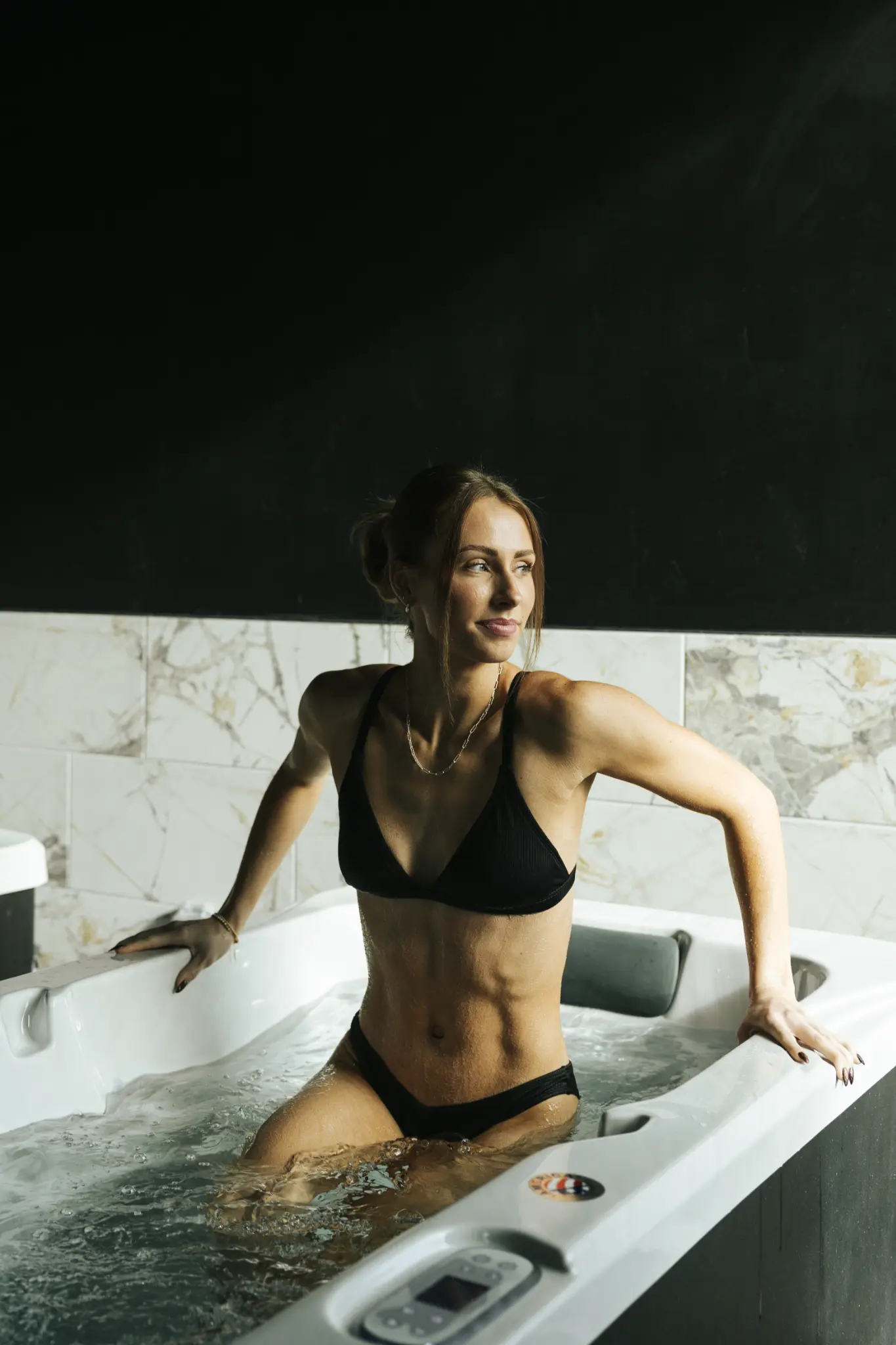
Step 2: Contrast Therapy — Infrared Sauna + Cold Plunge (20-30 minutes) Alternate between 15 minutes in the infrared sauna (130-150°F) and 2-3 minutes in the cold plunge (mid-40°F). Repeat 2-3 rounds. The alternating vasodilation and vasoconstriction creates a circulatory pump that flushes metabolic waste from your muscles while delivering fresh oxygenated blood.
Step 3: Compression Therapy (30 minutes) Pneumatic compression boots squeeze your legs in sequential waves from feet to hips, mechanically flushing lactic acid and reducing swelling. This is especially effective for the quad and calf soreness that skiing creates.
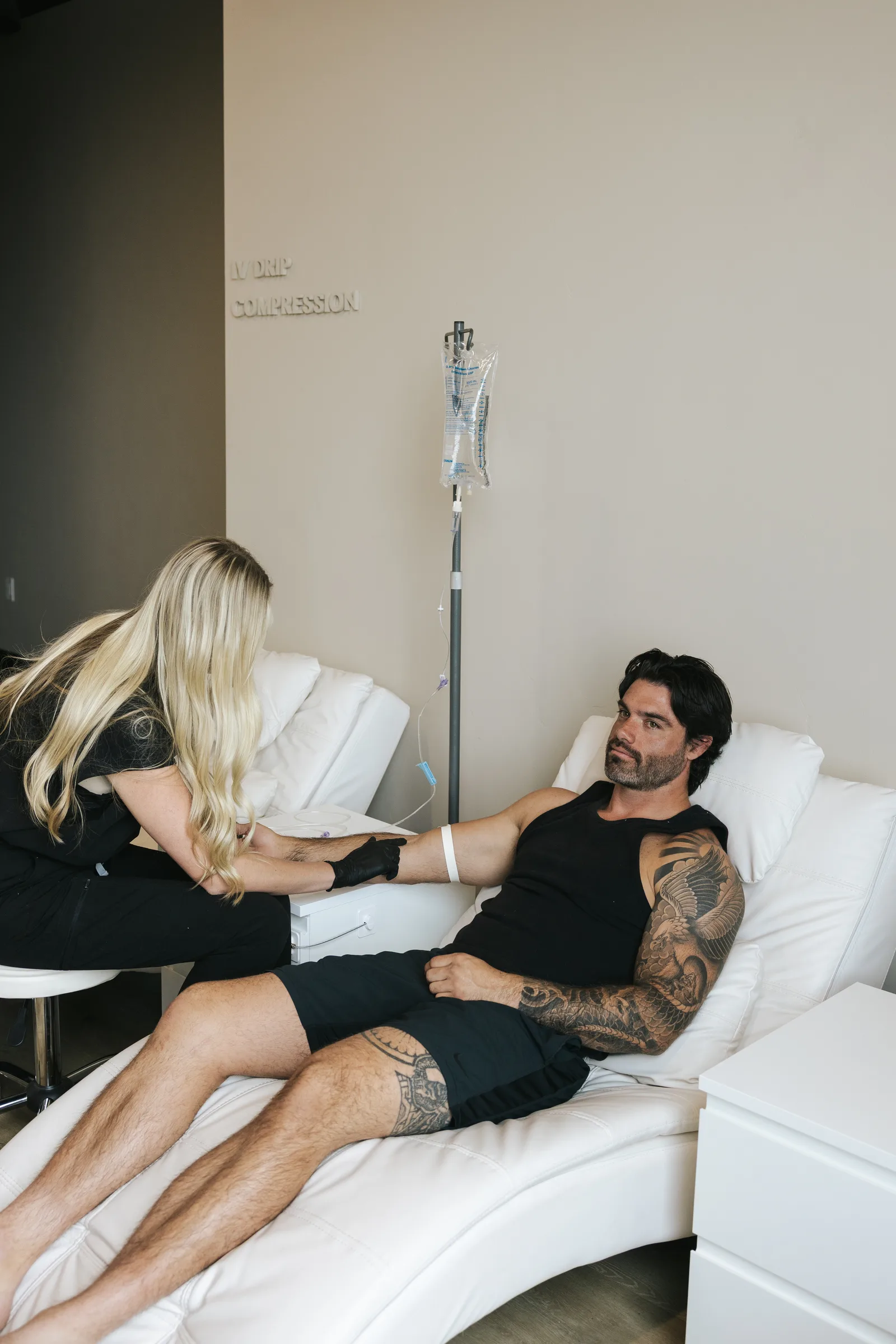
Step 4: IV Hydration (optional, 45 minutes) If you skied at altitude and didn't hydrate well, an Athletic Recovery IV or Myers' Cocktail replenishes electrolytes, B-vitamins, and fluids directly into your bloodstream. Many of our skiing members report this may help relieve the "altitude hangover" feeling.
Why This Works: The Science of Cold + Heat Recovery
The combination of cold and heat therapy isn't just anecdotal — it's grounded in vascular physiology:
Cold therapy (cryotherapy and cold plunge) causes vasoconstriction — blood vessels narrow, reducing blood flow to inflamed areas. This limits the inflammatory cascade, reduces swelling, and numbs pain receptors. It also triggers norepinephrine release, which has anti-inflammatory effects throughout the body.
Heat therapy (infrared sauna) causes vasodilation — blood vessels expand, increasing blood flow. This delivers oxygen and nutrients to damaged muscle fibers while carrying away metabolic waste products (lactate, hydrogen ions, creatine kinase).
Alternating between the two (contrast therapy) creates a pumping action that moves fluid through your tissues more effectively than either modality alone. Research shows contrast therapy reduces DOMS severity by 30-50% compared to passive rest.
Compression therapy adds mechanical pressure that further accelerates this fluid exchange, particularly in the lower extremities where skiing damage concentrates.
Location: 35 Minutes from Park City and Sundance
Deliberate Wellness Studio sits in Vineyard, Utah — strategically located between Utah's major ski areas:
- Park City Mountain / Deer Valley: 35 minutes via I-15 and US-189
- Sundance Mountain Resort: 25 minutes via Provo Canyon
- Brighton / Solitude (Big Cottonwood): 45 minutes via I-15
- Snowbird / Alta (Little Cottonwood): 50 minutes via I-15
Many of our members stop at the studio on their way home from the slopes. Our hours accommodate après-ski timing — you can be in the cryotherapy chamber within an hour of your last run.
We're also just minutes from Provo, Orem, Lehi, and American Fork, making us the most accessible recovery studio for Utah County residents who ski regularly.
What Utah Skiers Are Saying
Our members who ski 20-50+ days per season consistently report:
- "I can ski back-to-back days now" — The contrast therapy protocol significantly reduces the soreness that used to force rest days between ski days.
- "My knees don't ache anymore" — Regular cryotherapy and compression therapy help manage the joint inflammation that accumulates over a ski season.
- "The IV after a powder day is a game-changer" — Altitude dehydration compounds muscle soreness. Rehydrating via IV may help reduce the headache and fatigue that usually hits the evening after skiing.
- "I recover in hours instead of days" — The full protocol (cryo + contrast + compression) compresses what would be 2-3 days of recovery into a single 60-90 minute studio visit.
Recovery Memberships for Skiers
If you ski regularly (10+ days per season), a Deliberate Wellness membership pays for itself quickly:
Total Wellness Membership ($100/month) — Unlimited access to cold plunge, infrared sauna, traditional dry sauna, red light therapy, and compression therapy. Perfect for the skier who wants contrast therapy and compression after every ski day.
Add-on services: Cryotherapy and IV therapy are available as individual sessions or discounted packs for members.
All services are HSA/FSA eligible — meaning you can use pre-tax health savings to fund your ski recovery. Many of our members use their HSA cards for memberships and cryotherapy throughout ski season.
Walk-ins are always welcome, but booking ahead guarantees your preferred time slot on busy powder day afternoons.
Ready to Experience It?
Book your session at Deliberate Wellness Studio in Vineyard, Utah. Walk-ins welcome. HSA/FSA eligible.
Book Post-Ski RecoveryFrequently Asked Questions
How soon after skiing should I do recovery therapy?+
Ideally within 2-4 hours of your last run. The sooner you address inflammation, the less severe your DOMS will be the next day. Many of our members stop at the studio on their drive home from the slopes. However, recovery therapy is still beneficial even 12-24 hours after skiing.
Is cryotherapy or cold plunge better after skiing?+
Both work well. Cryotherapy is faster (3 minutes vs 10+ minutes) and provides a stronger immediate energy boost. Cold plunge offers deeper tissue cooling and pairs perfectly with sauna for contrast therapy. Our recommended protocol uses cryotherapy first for the quick anti-inflammatory hit, then contrast therapy (cold plunge + sauna) for deeper recovery.
Can IV therapy help with altitude sickness from skiing?+
IV hydration can help address the dehydration component of altitude-related symptoms. Our Athletic Recovery IV includes electrolytes, B-vitamins, and magnesium that support your body's adaptation to altitude stress. Many skiers report it may help reduce the headache and fatigue associated with a full day at elevation.
How much does post-ski recovery cost at Deliberate Wellness?+
Our Total Wellness membership ($100/month) includes unlimited cold plunge, sauna, compression, and red light therapy — everything you need for contrast therapy recovery after skiing. Cryotherapy sessions are available as add-ons. All services are HSA/FSA eligible. Walk-in single sessions are also available.
Where is Deliberate Wellness located relative to Utah ski resorts?+
We're in Vineyard, UT — 35 minutes from Park City/Deer Valley, 25 minutes from Sundance, 45 minutes from Brighton/Solitude, and 50 minutes from Snowbird/Alta. We're right off I-15, making us an easy stop on the way home from any Wasatch resort.